Table of Contents
Discovering Counseling Options Near You in Utah
In today’s fast-paced world, finding counseling near me in Utah can feel overwhelming, especially when dealing with emotional challenges like anxiety or trauma. Many residents, particularly in rural areas, struggle with access to local mental health support in Utah. That’s where specialized services come in, offering hope and practical help for issues such as trauma PTSD counseling or ADHD anxiety counseling.
Butterfield Counseling and Neurofeedback (butterfield counseling homepage) provides integrated, non-invasive options right here in the state. Led by Zack Butterfield, CMHC, BCN, the multidisciplinary team combines evidence-based counseling with neurofeedback therapy to retrain brain function for children, adolescents, and adults facing anxiety, PTSD, ADHD, and addictions. With clinics in Riverdale and Logan, plus telehealth services across Utah, they prioritize accessible Utah-based therapy for emotional challenges. Drawing from APA guidelines on selecting qualified therapists, their licensed professionals ensure evidence-based practices in initial assessments and protocol-driven sessions. Now accepting new clients, they offer free initial phone consultations to discuss insurance and personalized needs–without any pressure or guarantees.
This guide will help you explore signs that it’s time to seek help, understand treatment options, and connect with trusted providers for effective, supportive care.
Recognizing When You Need Professional Mental Health Support
It’s common to feel overwhelmed when everyday challenges start affecting your well-being, especially if you’re navigating mental health concerns like ADHD, anxiety, trauma, PTSD, or addictions. Recognizing these signs early can lead to timely support, and for those searching for counseling near me in Utah, understanding these indicators is a vital first step toward feeling more in control.
Signs of ADHD and Anxiety in Daily Life
If you’re noticing patterns that disrupt your routine, it might be worth exploring ADHD anxiety counseling options. ADHD often shows up as persistent inattention, hyperactivity, and impulsivity, according to the National Institute of Mental Health (NIMH). For instance, you might struggle to stay focused during work meetings or forget important tasks, leading to frustration. Anxiety can amplify this with excessive worry, restlessness, or physical symptoms like a racing heart.
- Inattention: Frequently losing items, difficulty organizing tasks, or zoning out in conversations.
- Hyperactivity: Feeling constantly on the move, fidgeting, or interrupting others without realizing it.
- Anxiety symptoms: Persistent fear about everyday situations, avoidance of social events, or trouble sleeping due to overthinking.
Imagine a parent watching their child bounce from one activity to another without finishing, feeling exhausted by the constant worry that something’s wrong. These relatable experiences highlight the need for local therapy for attention issues, helping you self-assess and seek guidance before issues escalate.
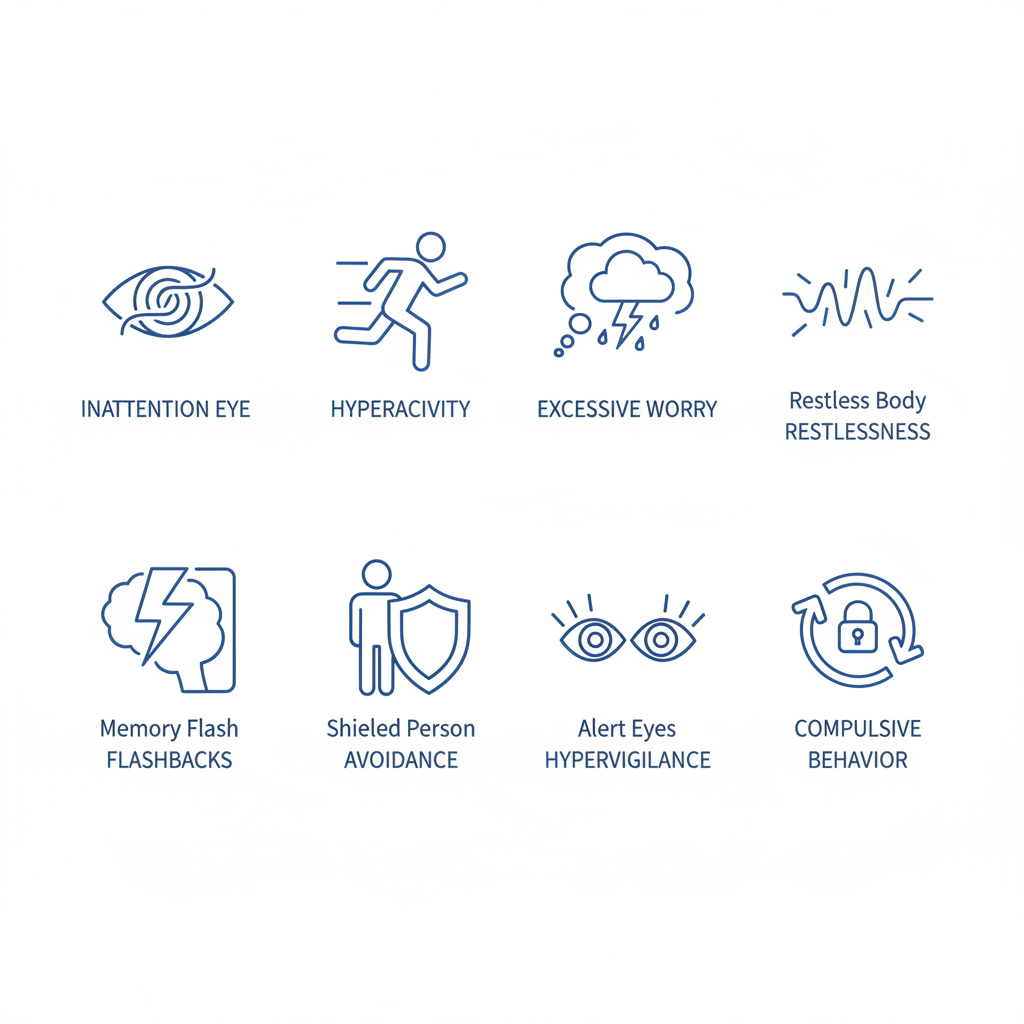
Illustrations of common mental health condition indicators
These visual cues can make it easier to connect the dots in your own life, prompting reflection on how such patterns might be influencing your daily energy and relationships. Moving forward, let’s look at other conditions that call for professional insight.
Indicators for Trauma, PTSD, and Addictions
Trauma and its lasting effects, including PTSD, can manifest in ways that feel isolating, while addictions often stem from attempts to cope with emotional pain. Signs of trauma PTSD counseling needs include flashbacks, nightmares, or heightened emotional reactivity to triggers, as these disrupt your sense of safety. PTSD might involve avoidance of reminders, hypervigilance, or negative mood changes that strain relationships.
- Trauma indicators: Sudden irritability, detachment from loved ones, or reliving past events through intrusive thoughts.
- PTSD symptoms: Startling easily, feeling numb, or blaming yourself for what happened.
- Addiction patterns: Compulsive behaviors like substance use or overeating to numb feelings, leading to guilt cycles.
Consider a young adult in Utah who avoids crowded places after a difficult experience, turning to unhealthy habits for relief–it’s a sign that Utah support for post-traumatic stress could provide the structure needed for healing. When these behaviors become essential to manage, seeking counseling near you in Utah ensures compassionate, accessible help.
Why Integrated Counseling Matters for Utah Residents
Living in Utah comes with unique factors, like distance between cities, that can delay access to care, but clinics in Riverdale and Logan make timely support more feasible for addressing ADHD, anxiety, trauma, PTSD, and addictions. Integrated approaches combine assessments with therapies tailored to your needs, reducing emotional reactivity and promoting brain retraining without relying solely on medication. At Butterfield Counseling and Neurofeedback, free initial consultations help you start this journey, offering neurofeedback alongside evidence-based counseling.
This holistic method matters because it tackles co-occurring issues–like ADHD and anxiety together–leading to better outcomes for children, teens, and adults. For example, neurofeedback can improve focus while therapy processes trauma, fostering lasting resilience. We’re here to help with mental health counseling services that fit your schedule, including telehealth for those in remote areas. Early intervention through these local resources empowers you to reclaim balance and happiness in your Utah community.
The Key Benefits of Integrated Neurofeedback and Counseling
Combining neurofeedback therapy with counseling offers integrated Utah therapy benefits for those seeking non-invasive mental health gains. At Butterfield, this approach provides counseling near me in Utah, focusing on evidence-based methods to support symptom management without relying solely on medications. Clients often experience improved daily functioning through brain retraining and therapeutic guidance, fostering hope and empowerment in their mental health journey.
Reducing Medication Reliance for ADHD and Anxiety
ADHD anxiety counseling at Butterfield highlights non-pharmacological options that may help reduce reliance on medications. By integrating neurofeedback with counseling, individuals can work toward better focus, reduced impulsivity, and calmer emotional responses. This combined therapy retrains brain patterns while addressing underlying emotional challenges, promoting sustainable improvements.
Key benefits include:
- Enhanced attention and executive function through targeted brainwave training, potentially decreasing the need for stimulants.
- Lowered anxiety levels via relaxation protocols that teach self-regulation skills during sessions.
- Improved sleep and mood stability, supporting overall well-being without side effects from drugs.
- Personalized progress tracking to build confidence in managing symptoms independently.
For example, a young adult in Ogden struggling with ADHD symptoms found that after several sessions, they could concentrate longer at work and felt less overwhelmed in social settings. Another client with anxiety reported fewer panic episodes, allowing them to engage more fully in family life. These outcomes align with Butterfield’s unique selling points, such as board-certified neurofeedback combined with psychotherapy, offering a scientifically informed alternative.
Managing PTSD and Trauma Symptoms Effectively
Neurofeedback aids trauma PTSD counseling in Utah by enhancing emotional regulation and processing traumatic memories safely. This integrated approach helps clients regain a sense of control, reducing hypervigilance and intrusive thoughts through gentle brain retraining alongside supportive talk therapy. Evidence from sources like the ISNR suggests neurofeedback can improve symptoms in PTSD, with studies showing better emotional balance after consistent training.
Key benefits include:
- Decreased flashbacks and nightmares by stabilizing overactive brain areas linked to fear responses.
- Stronger coping mechanisms for triggers, fostering resilience in daily life.
- Better emotional awareness and regulation, aiding in trauma narrative reconstruction.
- Reduced physiological stress responses, promoting a calmer nervous system over time.
Consider a veteran in the Logan area who, through these sessions, began sleeping through the night and reconnecting with loved ones without constant tension. A survivor of childhood trauma shared how the therapy eased their reactivity, enabling participation in community activities they once avoided. Butterfield’s telehealth services make this accessible statewide, emphasizing non-invasive techniques as a key strength.
Support for Addictions and Emotional Reactivity
For addictions and emotional reactivity, neurofeedback paired with counseling provides tools for lasting change via telehealth and in-clinic sessions in Riverdale and Logan. This method targets impulse control at the brain level while exploring behavioral patterns in therapy, potentially easing cravings and reactive outbursts. The butterfield counseling team brings multidisciplinary expertise to create tailored plans that support recovery.
Key benefits include:
- Diminished cravings through neurofeedback’s impact on reward pathways, complementing addiction-focused interventions.
- Heightened self-awareness to interrupt reactive cycles before they escalate.
- Strengthened decision-making skills, reducing relapse risks in high-stress situations.
- Holistic emotional support that builds healthy coping strategies for long-term sobriety.
One client overcoming substance use in the Riverdale area noted fewer intense urges after training, allowing them to maintain sobriety during challenging times. Another with emotional reactivity issues via telehealth found they responded more thoughtfully to conflicts, improving relationships. This reflects Butterfield’s commitment to alternative treatments to traditional psychiatry, with free initial consultations to guide your path forward.
How Neurofeedback Therapy and Counseling Work Together
If you’re seeking counseling near me in Utah, understanding how neurofeedback therapy combines with counseling can clarify the path to better mental health. At Butterfield Counseling and Neurofeedback, this integrated approach retrains the brain while addressing emotional challenges through non-invasive methods. Imagine starting with a simple assessment that maps your brain’s activity, then moving into sessions that build resilience against anxiety, ADHD, or trauma. This combined treatment protocols locally emphasize personalization, drawing from evidence-based practices to support lasting change without relying solely on medication.
The Process of Neurofeedback Training
Neurofeedback training begins with an initial assessment to evaluate brain function using quantitative EEG (qEEG), which maps electrical patterns much like a roadmap for your neural activity. This step, often lasting 1-2 hours, identifies areas needing support, such as overactive waves linked to anxiety or ADHD. Protocols are then customized based on these findings, focusing on internal factors like your unique alpha peak frequency for more effective self-regulation, as highlighted in neurofeedback research.
- Setup and Monitoring: In a comfortable clinic setting, sensors are placed on your scalp to monitor brainwaves in real-time without discomfort or electricity entering the body.
- Feedback Delivery: During 30-45 minute sessions, you watch a video or play a game; positive reinforcement appears when your brain produces desired patterns, training it like rewarding a muscle for strengthening.
- Progress Tracking: Sessions occur 1-2 times weekly, with software analyzing improvements over 20-40 visits, adjusting protocols to enhance outcomes influenced by external factors like session duration and feedback modality.
This brain training with therapy in Utah empowers you to gain control over focus and stress responses. We’re here to help guide you through each step, ensuring a supportive experience.
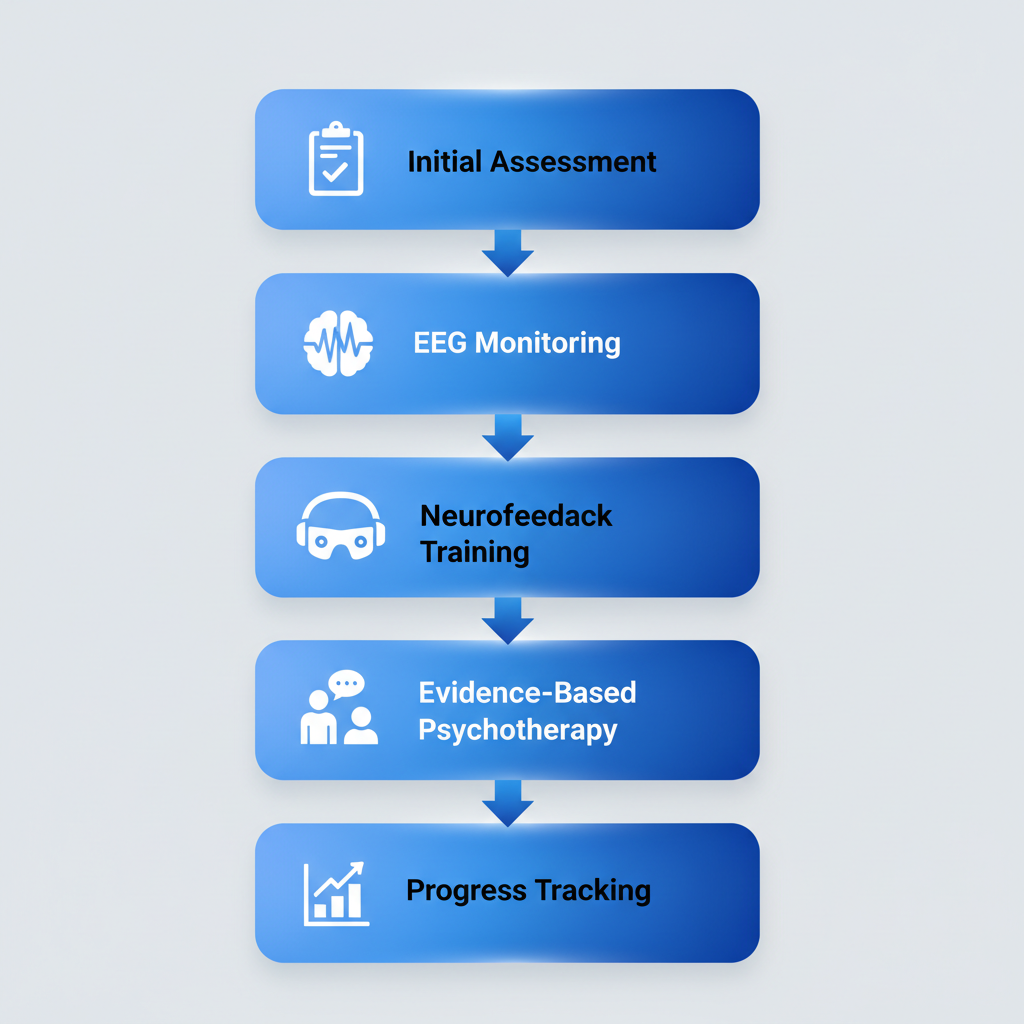
Step-by-step integration of neurofeedback and counseling for mental health
Building on this foundation, the visual diagram above shows how these elements flow together, from evaluation to ongoing support, making the process feel approachable and structured for everyday life.
Integrating Evidence-Based Psychotherapy
Combining neurofeedback with psychotherapy amplifies results by tackling both brain patterns and thought processes. For ADHD anxiety counseling, cognitive behavioral therapy (CBT) integrates seamlessly, teaching practical skills to manage worries and impulsivity while neurofeedback stabilizes attention. Sessions might alternate, with CBT homework reinforcing the brain’s retraining, much like combining exercise with nutrition for fitness.
For trauma PTSD counseling, cognitive processing therapy (CPT) pairs powerfully with trauma informed neurofeedback therapy, helping rewrite trauma narratives as brainwaves calm hyperarousal. Validated by VA resources, CPT challenges stuck beliefs from PTSD, reducing symptoms in 12 weekly sessions. This duo addresses root causes, with neurofeedback providing physiological relief and therapy emotional processing.
Imagine discussing a challenging memory in a safe space, then using neurofeedback to ease the body’s stress response–personalization ensures protocols fit your needs, boosting self-regulation for anxiety or addictions.
Telehealth and In-Clinic Options in Utah
Butterfield offers flexible formats to fit your lifestyle, whether in-clinic at our Riverdale or Logan locations or via telehealth within Utah. In-clinic sessions in Riverdale provide hands-on EEG setup in a serene environment, ideal for those preferring face-to-face interaction during the 45-minute neurofeedback portions.
Telehealth adaptations maintain efficacy through remote EEG caps or app-based feedback, allowing psychotherapy via secure video calls–perfect for busy schedules or rural areas. Frequency remains 1-2 sessions weekly, with progress tracked digitally. Now accepting new clients, we’re here to help adapt combined protocols to your location, ensuring accessible care across Utah.
This blend of options supports consistent engagement, whether you’re driving to Logan or joining from home, fostering sustainable improvements in mental well-being.
Selecting the Right Counseling and Neurofeedback Services
When seeking effective mental health support, selecting the right services can empower you to address challenges like anxiety, addictions, or trauma with confidence. In Utah, options like board-certified neurofeedback combined with counseling offer non-pharmacological alternatives that align with evidence-based practices. This guide walks you through key steps to make informed choices tailored to your needs.
Evaluating Providers and Insurance Coverage
Start your search for counseling near me in Utah by verifying provider credentials to ensure quality care. Look for licensed professionals, such as clinical mental health counselors (CMHCs) and board-certified neurofeedback therapists, who specialize in areas like trauma PTSD counseling. The American Psychological Association recommends checking state licensing boards and professional affiliations to confirm qualifications, noting that effective therapists often hold advanced degrees and ongoing training.
Next, inquire about insurance coverage, especially for neurofeedback therapy, which may be partially covered under mental health benefits. Contact your provider to ask about in-network status and session costs. For Utah-specific options, clinics like Butterfield Counseling offer integrated services at locations in Riverdale and Logan, emphasizing best Utah mental health practices with free phone intakes to discuss coverage.
Use this checklist to evaluate:
- License verification via Utah Division of Occupational and Professional Licensing.
- Specialization in your concerns, like PTSD or anxiety.
- Client testimonials and success metrics, as per APA guidelines.
These steps help you select local Utah therapists who fit your needs and budget.
Choosing Between Telehealth and In-Person Sessions
Deciding between telehealth and in-person sessions depends on your lifestyle and treatment goals, particularly for addictions, ADHD, and trauma counseling in Utah’s Riverdale and Logan areas. Telehealth provides flexibility for busy schedules, allowing secure video sessions from home, which is ideal for ongoing support in remote parts of the state. It’s especially useful for initial assessments or maintenance sessions, reducing travel time while maintaining privacy.
In-person visits at clinics like those in Riverdale or Logan offer hands-on elements, such as biofeedback equipment for neurofeedback, which can enhance engagement for complex issues like addictions recovery. Consider your comfort level: telehealth in Utah suits those with mobility challenges, while in-person builds rapport through face-to-face interaction. Butterfield Counseling supports both formats statewide, ensuring continuity for ADHD or trauma treatment.
Weigh factors like:
- Accessibility: Telehealth for convenience, in-person for equipment needs.
- Effectiveness: Research from the International Society for Neuroregulation and Research supports both for anxiety and PTSD outcomes.
- Location: Riverdale for northern Utah access, Logan for Cache Valley residents.
This choice promotes personalized care that fits your routine.
Preparing for Your Initial Consultation
Getting ready for your first session sets a strong foundation for ADHD anxiety counseling or other treatments. Gather your medical history, current symptoms, and goals to share with licensed professionals near you. Prepare questions about the process, such as how neurofeedback integrates with therapy and expected timelines, to clarify your path forward.
During the consultation, expect an assessment to tailor the plan, focusing on evidence-based approaches without medication reliance. Butterfield’s free phone intake is a great starting point; reach out via butterfield counseling contact to schedule and discuss specifics. This empowers you to begin trauma or anxiety support confidently.
Tips for preparation:
- List symptoms and triggers for clear communication.
- Note insurance details and preferences for telehealth or in-person.
- Research session structure, drawing from ISNR best practices for neurofeedback.
By arriving prepared, you’ll collaborate effectively with your therapist for lasting progress.
Taking the Next Step in Your Mental Health Journey
As you reflect on your mental health needs, remember the insights shared throughout this guide on finding counseling near me in Utah. Recognizing signs of ADHD, anxiety, trauma, PTSD, or addictions is the first step toward healing. Zack Butterfield’s hunting for happiness book offers valuable perspectives drawn from his expertise, emphasizing integrated approaches like neurofeedback and counseling to retrain the brain and build resilience.
Butterfield Counseling and Neurofeedback stands out with its evidence-based combination of board-certified neurofeedback therapy and clinical counseling, reducing reliance on medication for conditions like ADHD and anxiety. Our clinics in Riverdale and Logan provide convenient access, alongside telehealth options across Utah. Free initial phone consultations help you start your Utah path to wellness without commitment. As the National Institute of Mental Health highlights, professional support is key to managing ADHD and co-occurring issues effectively, through therapies like cognitive behavioral techniques and emerging neurofeedback interventions.
Now Accepting New Clients–reach out today to explore local recovery resources tailored to your needs. Whether seeking trauma PTSD counseling or ADHD anxiety counseling, taking this step can lead to lasting improvements in your daily life. We’re here to help guide you toward a brighter, more balanced future.
Resources
Ste 200 Riverdale
Ut
84405