Table of Contents
Finding an Anxiety Therapist in Utah
Anxiety can feel overwhelming, turning everyday tasks into daunting challenges for many. According to the National Institute of Mental Health, anxiety disorders affect about 19% of adults annually in the United States, with similar patterns seen in Utah where stress from work, family, and life transitions amplifies worries. If you’re searching for an anxiety therapist in Utah, professional support makes a real difference in regaining control and peace.
While self-help strategies offer temporary relief, evidence-based therapy provides lasting tools to address root causes. Cognitive behavioral therapy, or CBT, helps reframe negative thought patterns, while integrated approaches like neurofeedback combined with counseling train the brain for better emotional regulation. Local anxiety counseling experts in Utah deliver these services through welcoming clinics in Riverdale and Logan, plus convenient telehealth options for residents statewide. Counseling services Utah often include free initial consultations to ease your start.
As you explore Utah-based mental health support for anxiety, this guide covers understanding the condition, therapy benefits, the process, and tips for choosing the right fit. Whether for children, teens, or adults facing anxiety or trauma, friendly help is available nearby to support your journey toward calmer days.
Understanding Anxiety and Therapy Options
Anxiety can touch anyone, turning everyday moments into challenges that feel overwhelming. If you’ve ever felt a knot in your stomach before a big meeting or found your mind racing with worries that won’t quit, you’re not alone. This section explores what anxiety really feels like, the qualifications to look for in helping professionals, and how to access support right here in Utah. We’re Here to help you navigate these feelings with evidence-based options like cognitive behavioral therapy and neurofeedback, focusing on non-medication paths to relief.
What Anxiety Feels Like and Its Common Forms
Imagine waking up with a constant buzz of worry about work, family, or even small decisions, making it hard to focus or relax–that’s often the reality of generalized anxiety disorder (GAD). According to the National Institute of Mental Health, GAD involves excessive, ongoing anxiety and worry that’s tough to control, affecting about 3.1% of adults in the U.S. each year. Physical signs like muscle tension, restlessness, fatigue, or irritability can make daily tasks feel exhausting, and it hits women more often, starting as early as childhood or young adulthood.
Social anxiety might show up as intense fear in group settings, like parties or meetings, where you dread judgment so much it leads to avoidance. Panic disorder brings sudden, intense episodes of fear with heart palpitations, sweating, or dizziness, feeling like a heart attack even without danger. These forms disrupt life, but recognizing them is the first step. An anxiety therapist in Utah can offer personalized insights to help you understand and manage these experiences without judgment.
Common threads include that disproportionate worry lasting months, often alongside issues like depression. Everyday scenarios, such as fretting over a routine drive or struggling to sleep, build empathy for how anxiety steals peace. Healthy habits like mindfulness can support, but professional guidance makes a real difference in reclaiming calm.
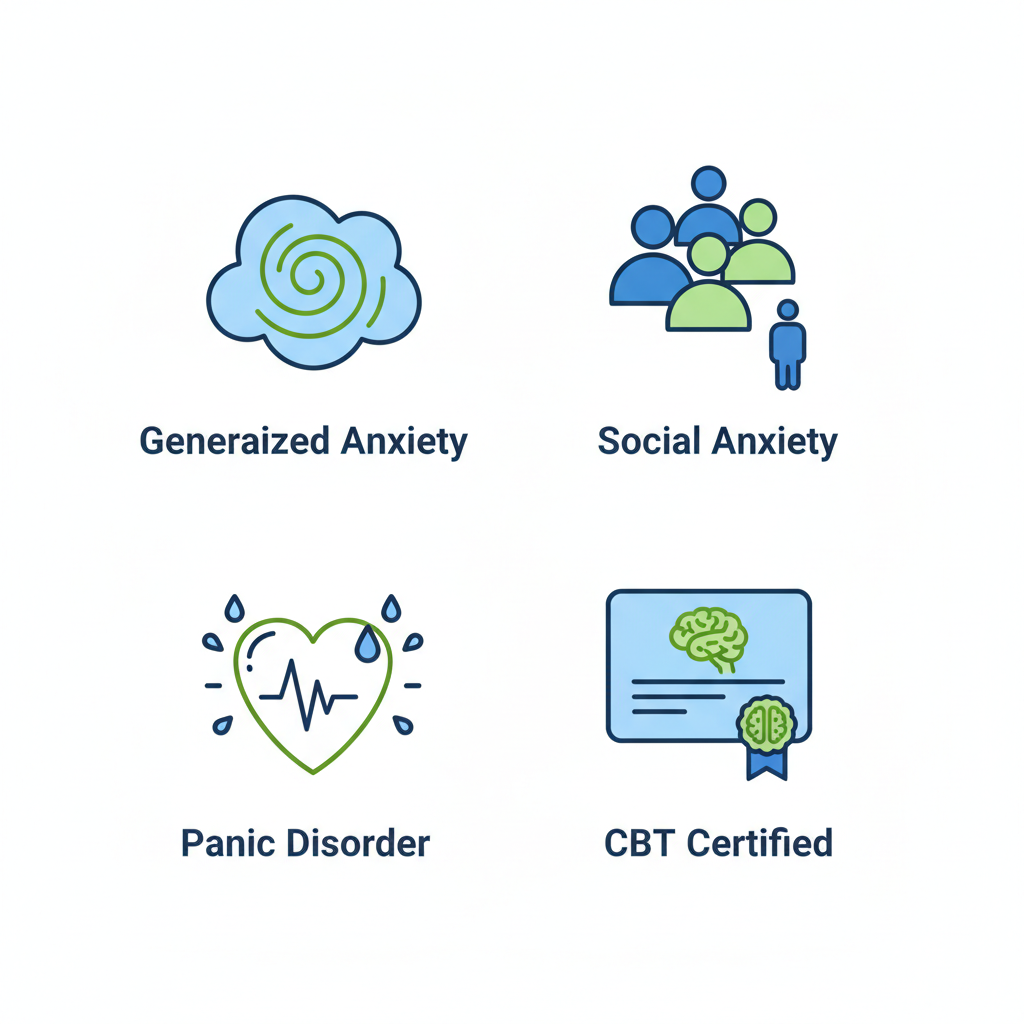
Icons illustrating anxiety types and therapy qualifications for counseling services
Key Qualifications for Anxiety Therapists
When seeking help, start with credentials that ensure expertise. Look for therapists with a Clinical Mental Health Counselor (CMHC) license in Utah, which requires a master’s degree, supervised hours, and passing exams, as outlined by the American Psychological Association’s standards for clinical training. Board Certified in Neurofeedback (BCN) adds specialized skills in brain-training techniques to complement talk therapy.
Experience matters too–choose providers with a track record in anxiety cases across ages, from youth to adults, handling co-occurring issues like trauma. Cognitive behavioral therapy anxiety is a cornerstone, teaching you to reframe worry patterns through practical exercises. CBT approaches for worry management focus on identifying triggers and building coping strategies, often showing benefits in weeks to months, though timelines vary by individual.
Our licensed mental health team licensed mental health team brings this blend, including neurofeedback for deeper emotional regulation without meds. Sessions typically cost $100-200, with insurance covering much–check your plan. Bullet-point perks: CBT empowers quick mindset shifts; neurofeedback trains brain waves for lasting calm. No promises of cures, but these tools foster real progress.
Local Availability in Utah Communities
Utah anxiety counseling specialists are accessible, especially in areas like Logan and Riverdale, where clinics offer in-person and telehealth for flexible support. In Logan at 115 Golf Course Rd, or Riverdale at 4933 S 1500 W, Ste 200, you can connect with anxiety therapists Utah wide, including virtual sessions statewide.
Directories like Psychology Today or local associations help find matches, focusing on those experienced in CBT and neurofeedback. Telehealth expands reach, ideal if travel’s tough, with secure video for privacy. Now Accepting New Clients means quick starts, often with free initial consults to discuss needs.
Benefits of Anxiety Therapy in Utah
Anxiety therapy offers transformative support for those navigating persistent worry and fear in their daily lives. By combining approaches like cognitive behavioral therapy with innovative techniques such as neurofeedback, individuals in Utah can experience meaningful relief. Imagine waking up with less overwhelming thoughts, ready to tackle your day with renewed confidence. These therapies address the root causes of anxiety, helping children, adults, and families build resilience without relying solely on medication.
Emotional and Daily Life Improvements
Therapy significantly reduces everyday worry by teaching practical tools to manage anxious thoughts. An evidence based therapies like cognitive behavioral therapy anxiety help reframe negative patterns, leading to calmer interactions at home and work. For instance, clients often report feeling more present during family gatherings or school events after just a few sessions.
Integrated neurofeedback complements this by training the brain to regulate stress responses more effectively. This non-invasive method provides real-time feedback on brain activity, empowering better emotional control. According to the National Institute of Mental Health, such interventions can improve daily functioning for many with anxiety disorders, where excessive fear disrupts relationships and routines.
Long-Term Wellness and Skill Building
Sustained relief from anxiety typically emerges over 8-12 sessions, as therapy builds lasting coping skills. Evidence-based sessions focus on developing self-awareness and problem-solving techniques, promoting ongoing wellness without short-term fixes. Clients learn to identify triggers early, preventing escalation and supporting mental health long into the future.
| Approach | Focus | Long-Term Benefit |
|---|---|---|
| Traditional CBT | Thought Patterns | Cognitive Coping Tools |
| Neurofeedback | Brain Regulation | Lasting Neural Calm |
These combined methods not only alleviate symptoms but equip you with lifelong tools, transitioning smoothly into exploring how sessions unfold.
How Anxiety Therapy Works in Practice
Anxiety therapy offers practical tools to manage overwhelming worries, and in Utah, options like cognitive behavioral therapy and neurofeedback provide structured support. These approaches help individuals build skills for lasting calm, whether through in-person sessions at clinics in Riverdale or Logan or via telehealth. We’re here to help demystify the process, showing how sessions unfold to make seeking care feel approachable.
Session Structure and Techniques
Working with an anxiety therapist in Utah typically begins with an initial assessment to understand your unique experiences. During your session, expect a welcoming environment where the therapist conducts interviews and uses questionnaires to identify anxiety patterns, drawing from evidence-based methods like those outlined by the National Institute of Mental Health for generalized anxiety disorder. This step sets the foundation for tailored strategies.
| Phase | Activity | Duration |
|---|---|---|
| Assessment | Intake & History | 60 Min |
| Active Therapy | CBT or Neurofeedback | 45-50 Min |
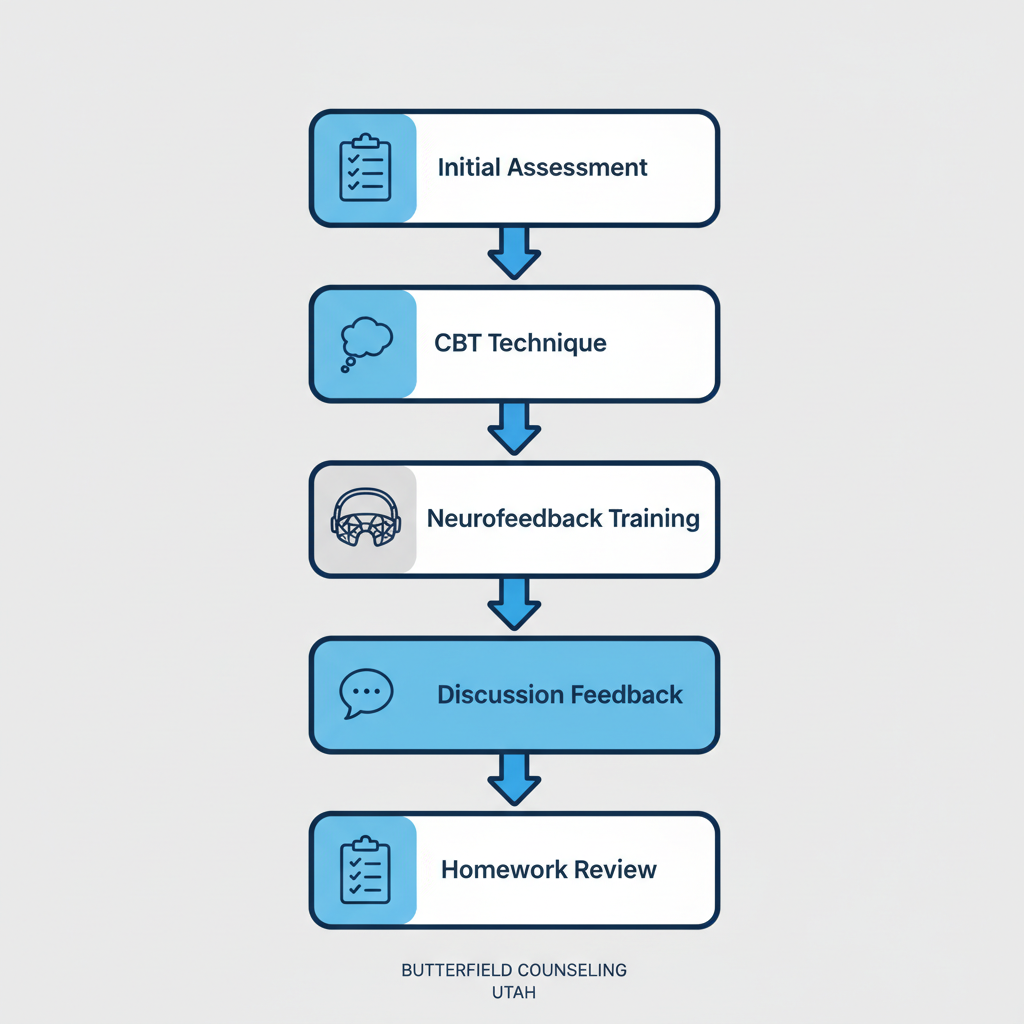
Step-by-step guide to anxiety therapy sessions at Butterfield Counseling
Integrating Approaches for Better Results
Combining therapies often yields stronger outcomes, especially for anxiety in youth and adults. For instance, integrating CBT with neurofeedback creates a holistic path, where cognitive tools address thought patterns while brain training calms physiological responses. In practice examples from anxiety therapists Utah, a teenager might use exposure exercises alongside EEG sessions to manage school-related worries, reducing irritability over time.
Best Practices for Choosing Anxiety Therapy
Selecting the right therapy for anxiety can make a significant difference in your journey toward better mental health. In Utah, where access to qualified professionals is growing, focusing on best practices ensures you find a supportive match. Whether you’re seeking trauma informed neurofeedback or traditional talk therapy, these steps empower you to make informed choices tailored to your needs.
Evaluating Therapists and Credentials
When choosing Utah anxiety specialists, start by verifying essential qualifications to ensure reliable care. Look for professionals licensed as Clinical Mental Health Counselors (CMHC) or similar credentials through the Utah Division of Occupational and Professional Licensing.
| Criteria | Requirement |
|---|---|
| Licensure | CMHC / LCSW in Utah |
| Specialization | Anxiety & Trauma Focus |
Preparing for Your First Session
- Bring a list of your anxiety triggers and past coping attempts.
- Note any preferences for therapy style, like structured CBT exercises.
- Prepare to share goals, such as reducing daily worry.
Maintaining Progress Post-Therapy
- Join support networks in Salt Lake City or Logan for peer encouragement.
- Schedule booster sessions quarterly to refresh techniques.
- Explore apps for CBT-inspired exercises at home.
Next Steps for Anxiety Support in Utah
Take that first step today by scheduling a free consultation with anxiety therapists utah who specialize in evidence-based approaches. Resources like the Utah 988 Help Resources provide immediate, confidential support, connecting you to trained crisis workers 24/7 for guidance and safety planning. In Utah, brighter days await with proactive steps toward well-being.
Resources
Ste 200 Riverdale
Ut
84405