ADHD Treatment in Utah: A Medication-Free Approach That Works
Finding the right ADHD treatment can feel like a long process. Maybe you’ve tried therapy, medication, or a combination of both, and the results haven’t matched what you were hoping for. Maybe you’re just starting to explore your options and want to understand what’s out there before committing to a path.
Either way, you’re not alone. A lot of people in Utah are looking for an approach that goes beyond what they’ve already tried, and that’s exactly why we offer what we do.
We work with children, adolescents, and adults at our offices in Riverdale and Logan, and through telehealth appointments across Utah.
Why So Many Families Are Looking for ADHD Treatment Without Medication in Utah
Medication works for some people with ADHD. We don’t deny that. But it doesn’t work for everyone, and even when it does, many parents and adults are uncomfortable with the long-term tradeoffs. Stimulant medications can suppress appetite, disrupt sleep, cause mood swings, and require ongoing adjustments as the body builds tolerance.
For kids especially, the side effects can change the way they show up at school and at home. Parents tell us their child becomes quieter, less themselves. That’s not what treatment is supposed to do.
That’s why more families across Utah are looking for alternatives, and why neurofeedback has become such an important part of what we offer.
How Neurofeedback Works for ADHD
ADHD is fundamentally a brain regulation problem. People with ADHD tend to produce too many slow-wave (theta) brain waves and not enough fast-wave (beta) activity in the areas responsible for attention and executive function. This imbalance makes it hard to focus, stay organized, control impulses, and manage emotions.
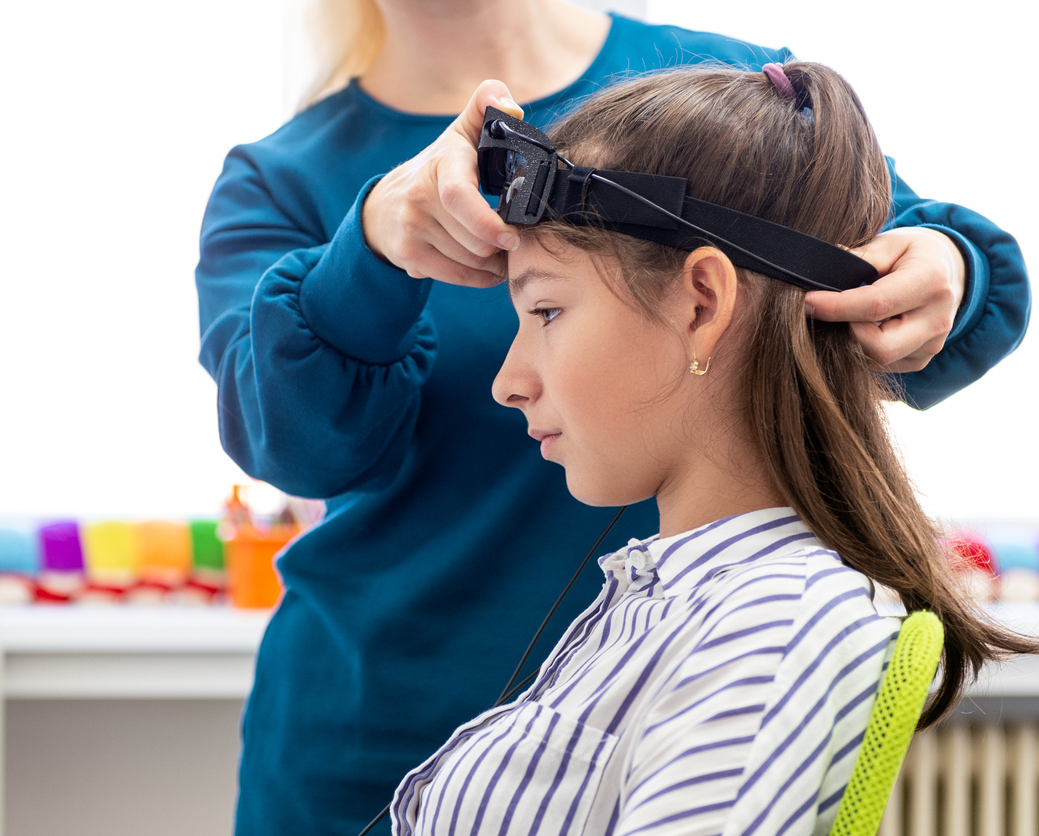
Neurofeedback therapy works by measuring these brainwave patterns in real time and giving the brain direct feedback when it shifts toward healthier activity. During a session, sensors are placed on the scalp (it’s completely painless), and the client watches a screen or listens to audio. When the brain produces the desired wave patterns, the media plays smoothly. When it drifts, the feedback pauses or dims.
Over time, roughly 30 to 40 sessions for most clients, the brain learns to produce these healthier patterns on its own. It’s not a quick fix. It’s training, similar to physical therapy for the brain.
Research supports this approach. The American Academy of Pediatrics has rated neurofeedback as a Level 1 “Best Support” intervention for ADHD, the same evidence category as medication.
What ADHD Treatment Looks Like at Butterfield C&N

Every client starts with a free 15-minute phone consultation so we can learn about your situation and determine if our approach is the right fit. From there, a typical treatment plan includes:
Comprehensive assessment. We start by mapping brainwave activity to understand exactly what’s happening. This isn’t guesswork. We look at real data to build a treatment plan specific to each client.
Neurofeedback sessions. Sessions are typically one hour, one to two times per week. Kids will set in our chair with the equipment attached and be rewarded by visual and auditory stimuli while watching a show of their choice. There’s no pain, no medication, and no invasive procedures.
Counseling support. Neurofeedback addresses the neurological side of ADHD, but we also work on the behavioral and emotional challenges that come with it. Our therapists use evidence-based approaches like Cognitive Behavioral Therapy (CBT), Acceptance and Commitment Therapy (ACT), and Dialectical Behavior Therapy (DBT) to help clients build coping strategies, improve emotional regulation, and handle day-to-day challenges.
Progress tracking. We regularly reassess brainwave patterns so both you and our team can see measurable changes over the course of treatment.
Who We Help
Our ADHD treatment isn’t limited to one age group. We work with:
- Children (ages 5+) who are struggling in school, having trouble with impulse control, or showing signs of sensory processing issues alongside ADHD.
- Adolescents dealing with the added pressures of social dynamics, academic demands, and identity development on top of ADHD symptoms.
- Adults who may have gone undiagnosed for years or who have tried medication and are looking for something different.
Several of our clinicians specialize in ADHD and neurofeedback, including our founder Zack Butterfield (CMHC, BCN) and Clinical Director Alecc Quezada (CMHC, BCN), both Board Certified in Neurofeedback through the Biofeedback Certification International Alliance.

ADHD Looks Different Than Most People Think

One thing we hear constantly from new clients is some version of “I didn’t think it was really ADHD because…” The stereotypes of hyperactive boys bouncing off walls leave out a huge portion of people who actually have ADHD.
In reality, ADHD can look like a quiet child daydreaming at their desk. It can look like a teenager who’s smart but can’t seem to turn in assignments on time. It can look like an adult who chronically procrastinates, loses track of conversations, or feels overwhelmed by tasks that seem simple to everyone else.
If any of that sounds familiar, it’s worth having a conversation. We offer a free phone consultation so you can talk through your concerns with no commitment.
Insurance and Accessibility
We accept a wide range of insurance plans including Aetna, BCBS, Cigna, DMBA, Select Health, Tricare, UHC, PEHP, and several others. You can find the full list of accepted insurances on our services page.
For clients who don’t live near our Riverdale or Logan offices, we also offer telehealth therapy throughout the state of Utah.
Frequently Asked Questions
Is neurofeedback an effective treatment for ADHD?
Yes. Neurofeedback has been rated a Level 1 “Best Support” intervention for ADHD by the American Academy of Pediatrics. Multiple peer-reviewed studies have shown that neurofeedback can reduce ADHD symptoms, with results that persist long after treatment ends, unlike medication, which only works while you’re taking it.
How many neurofeedback sessions does it take to see results?
Most clients begin noticing changes within 10 to 15 sessions. A full course of treatment is typically 30 to 40 sessions. Each person’s brain responds at its own pace, so we track progress with brainwave assessments and adjust the treatment plan as needed.
Can neurofeedback replace ADHD medication?
Many of our clients use neurofeedback as an alternative to medication, and some who come to us already on medication are able to reduce or discontinue it over time with their prescriber’s guidance. Our goal isn’t to make decisions about your medication. It’s to give the brain the tools to function better on its own.
What ages do you treat for ADHD?
We work with children (typically ages 5 and up), adolescents, and adults. ADHD doesn’t look the same at every age, and our treatment plans are adjusted for the specific challenges each age group faces.
Do you accept insurance for ADHD treatment?
Yes. We accept most major insurance plans in Utah including Aetna, BCBS, Cigna, DMBA, Select Health, Tricare, UHC, and more. Contact us to verify your specific plan.
Take the First Step
If you’ve been searching for an ADHD therapist near you who offers more than just a prescription pad, we’d like to talk. Call 385-330-2818 or schedule a free 15-minute consultation to find out if Butterfield Counseling & Neurofeedback is the right fit for you or your child.