
If you’ve been researching brain-based treatments, you’ve probably seen the terms neurofeedback and biofeedback used in ways that make them seem interchangeable. They’re not. Both involve real-time monitoring and feedback, but they target different systems and are used for different purposes. At Butterfield Counseling & Neurofeedback, we specialize in neurofeedback specifically, and understanding the distinction can help you figure out which approach, or whether both, might be right for what you’re dealing with.
What Is Biofeedback?
Biofeedback is a broad category that includes any technique using real-time monitoring of physiological functions to help a person learn to control them. Sensors placed on the body can measure heart rate, muscle tension, skin temperature, breathing rate, blood pressure, and other functions. A screen or audio signal provides feedback, and over time the person learns to regulate these functions more effectively, often consciously.
Common uses include chronic pain management, tension headaches, migraine prevention, high blood pressure, stress-related physical symptoms, and general relaxation training. If the primary issue lives in the body, biofeedback can be a good fit.
What Is Neurofeedback?
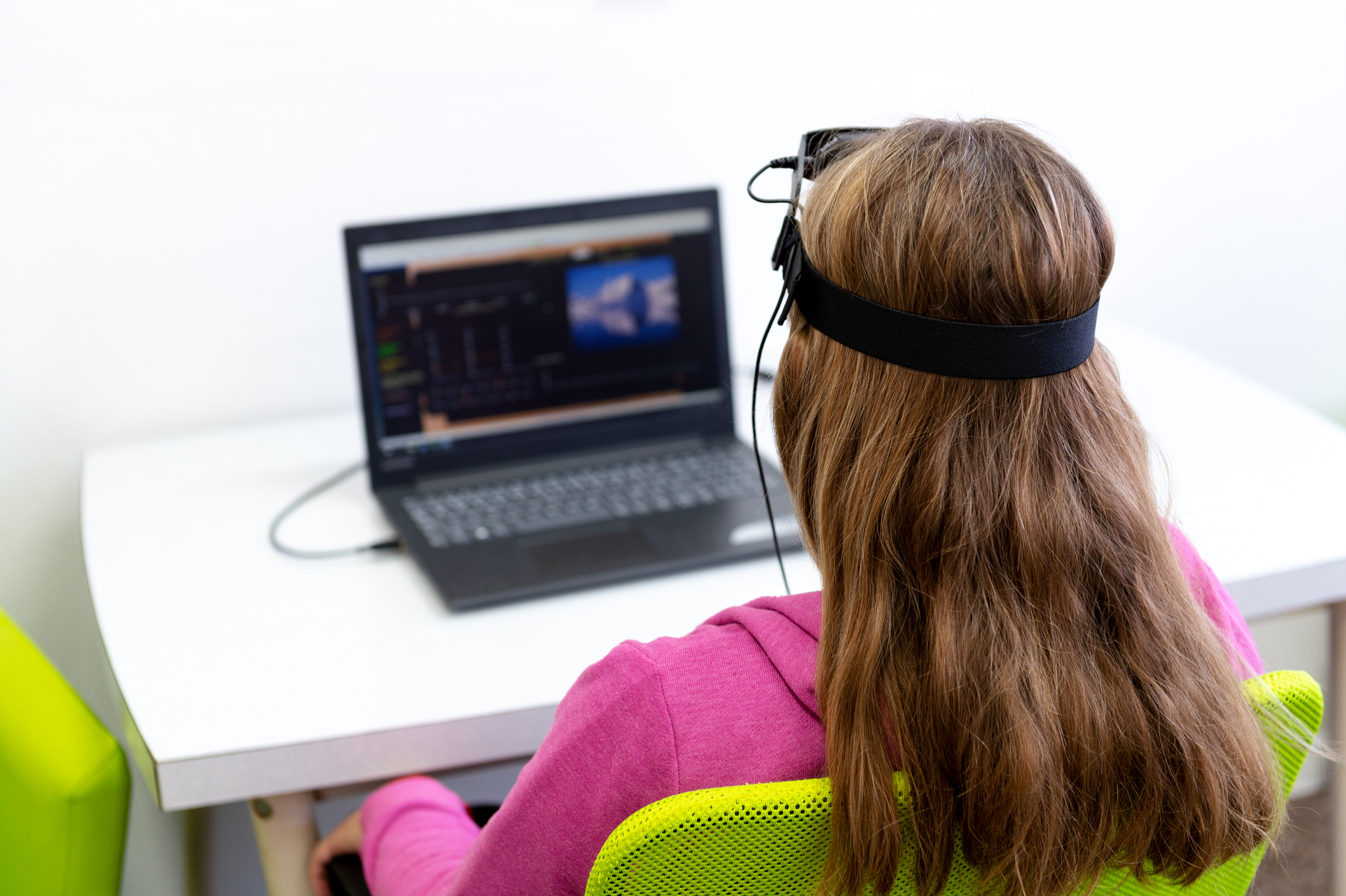
Neurofeedback is a specific type of biofeedback that focuses exclusively on the brain’s electrical activity. Sensors on the scalp read brainwave patterns, and the feedback is designed to help the brain learn to regulate itself. The target isn’t a muscle group, heart rate, or breathing pattern. It’s the brain’s own electrical signals: the delta, theta, alpha, beta, and gamma waves that determine how you think, feel, focus, sleep, and respond to stress. Learn more about how this works on our neurofeedback therapy page.
Because the brain controls everything else in the body, changes at the brainwave level often have widespread effects. Clients who come in for anxiety treatment frequently report improvements in sleep, focus, and emotional regulation as well, even though those weren’t the primary targets.
The Key Differences
What they target: Biofeedback targets body functions like heart rate, muscle tension, and breathing. Neurofeedback targets brainwave patterns in specific brain regions.
How they work: Biofeedback often teaches conscious control over physiological responses. You learn to deliberately slow your heart rate or relax a tense muscle. Neurofeedback works through operant conditioning at the brain level, meaning the brain learns subconsciously through feedback. You don’t have to “try” to change your brainwaves. The brain adapts on its own.
Conditions treated: Biofeedback is commonly used for chronic pain, tension headaches, and stress-related physical symptoms. Neurofeedback is used for ADHD, anxiety, depression, trauma and PTSD, OCD, addiction, autism and sensory processing issues, and other brain-based conditions.
Duration of results: Both can produce lasting results. Neurofeedback results are particularly durable because the brain forms new neural pathways through repeated training. Like learning a physical skill, the brain retains what it has practiced.
Which One Do You Need?
The simplest way to think about it: if your issue is primarily body-based, such as chronic muscle tension, pain, or blood pressure, biofeedback may be the better fit. If your issue is primarily brain-based, such as attention, mood, anxiety, trauma, sleep, or impulse control, neurofeedback is likely more appropriate.
At our practice, we pair neurofeedback with evidence-based counseling to create a comprehensive treatment plan. The neurofeedback addresses what’s happening at the neurological level while therapy addresses the thoughts, behaviors, and relational patterns that are part of the picture.
Frequently Asked Questions
Is neurofeedback better than biofeedback?
Neither is universally better. They treat different things. If your primary concern is brain-based, neurofeedback is likely the more targeted choice. Some practitioners combine both modalities, using biofeedback for body-level regulation and neurofeedback for brain-level training.
Can you do both at the same time?
Yes. Some practitioners integrate body biofeedback with neurofeedback. At our practice, we focus on neurofeedback combined with clinical counseling, which covers both the neurological and psychological components.
Is neurofeedback covered by insurance?
We accept most major insurance plans in Utah. Coverage for neurofeedback varies by plan. Contact us to verify your specific benefits.
Not sure which approach is right for your situation? Start with a conversation. Call 385-330-2818 or schedule a consultation.